Wednesday, October 26, 2011

The Ray

Let me start by saying that sharks, skates, and ray are known as cartilaginous fish because their skeletons are made of cartilage.  You may be wondering what is cartilage.  Well cartilage is the rubbery substance which lines our joints and gives our ears and nose its shape.  Although cartilage is weaker than bone it is strong enough to support some of the largest animals in the ocean.


Cartilaginous fish have many things in common.  Their bodies are covered with rough, sand papery skin and stiff fins that do not fold.  Their jaws are powerful with countless biting or crushing teeth.  Most of these fish are predators, but the largest species are filter feeders.  There are about 600 species of cartilaginous fish living in the sea.  Some lay eggs but many give birth to live young.


What is a Ray? 
I thought this was interesting when I read it.  Did you know that another name for a Ray is a "flat shark"? I read that scientist believe that rays evolved from sharks.  There are more than 150 species of rays, most of which live in the sea. Rays have been around for a really long time, let's say about a 150 million years. They were around when the dinosaurs roamed the earth.  Rays have flattened bodies and wing like fins. They sort of  look like kites. Many live on the seabed camouflaged, but a few spend most of their lives near the surface, flapping through the sea like underwater birds. Unlike sharks, these fish crush their food with blunt teeth. Their mouths and gill openings are on the undersides of their bodies. They have breathing holes on their upper surfaces, just behind their eyes.


Rays are all carnivores. That means that they are meat eaters. They eat fish, crustaceans, mollusks, and worms. Rays mostly hunt on or near the bottom of the ocean. Some are filter feeders, filtering small prey like plankton, small fish, and small crustaceans as they swim. Some rays are also hunters who find prey on the ocean floor.

Now let's talk about defense.  The ray has a super deadly defense against predators.  Many have poisonous spines on their tail which can poison other animals when they are stung. Some rays have long, whip-like tails and others have short tails. Some rays even have thorns on their body to protect it against predators. Rays come in many colors and the colors are different among species and males and females.


Rays come in many different sizes.  They can be a few inches wide to over 23 feet wide. The Short-nose electric ray is the smallest ray and it is the size of a pancake. The biggest ray is the Manta ray and it is 22 feet wide and weighs many tons.

 
 This is the Short-Nose Electric ray.  It really looks like a pancake.


Rays live in the Atlantic, Pacific and Indian Oceans. They are found in both cold and temperate waters and live between 8 meters and 3000 meters below the surface of the ocean. Did you know that it is almost impossible to tell the difference between a skate and a ray because they look so much alike? They are sort of like identical twins, just very hard to tell them apart.

Can you tell which is the ray and which is the skate?  See, I told you that it is almost impossible to tell.

 ray and skate
This is the Skate!                                                This is the Ray!
This is an interesting fact:  Rays were smarter than sharks and are very curious animals.


Differences Between Skates and Rays 

There are a few differences between skates and rays.  These are the major differences.


  • The number one difference is size. Rays can grow to a very large size. For example the manta ray can reach a width of 22 feet and weigh several tons. However, skates range from 16 inches to 5 feet. It is sort of like King Kong and Jane.
  • The second difference is defense.  Well defense is how they protect themselves.  Rays and skates defend themselves differently.  The ray tail has a stinging spine with venom, which it uses as a weapon against predators. However, the skates have large thorns on their backs and tails to defend itself against predators.
  • The final big difference is how they make their young.  All skates lay eggs  however, rays give birth to live young.


My favorite cartilaginous fish is the Manta ray. Also, today I am going to talk about the Manta ray.  It has been very interesting learning about this gigantic sea creature.  I have learned a lot in doing research on the Manta Ray.  Man Ray has given me a picture of himself, for you to get an idea of what a Manta ray looks like. Thanks Man Ray.


                           But that is probably not good enough right, so here is an actual Manta Ray. 
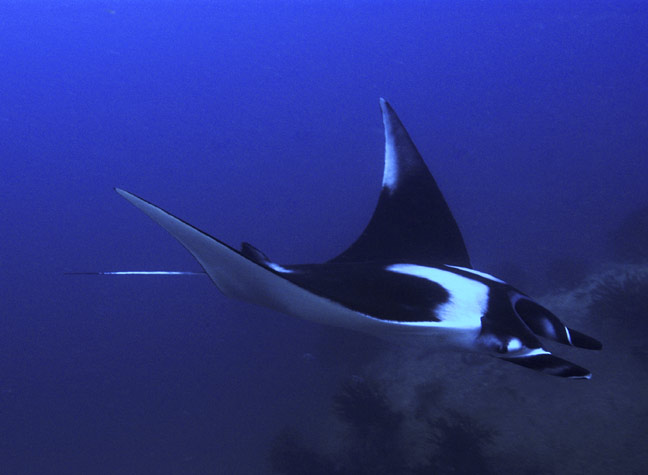


The Manta ray looks like a bird soaring with its wings spread out wide.


The Manta ray has been a part of many legends about sea monsters, but they are totally harmless.  The fact that Manta rays are harmless, is the number one reason that I like it the best out of all the cartilaginous fish in the ocean.  The Manta ray has a wingspan of about 23 feet and it is the largest ray in the world.  Manta rays a huge.  Like many of the largest sea animals, it feeds on plankton.  It scoops up the plankton as it swims.  It has a fleshy paddle on each side of its head to help it funnel food into its mouth.


Check out this Manta ray swimming around and filter feeding.  Look at the open mouth.


Now it is time to talk about sharks and rays.  Sharks and rays are related and belong to the same class.  By just looking at them it is hard to see that they are related but they have a lot of similarities.


This is a shark.                                                 This is a ray.


Similarities and Differences Between Sharks and Rays 

Let's start with the similarities.

Similarities     
  • Rays and sharks both have gills.
  • Rays and sharks both have a skeleton made of cartilage.
  • Rays and sharks both have fins.
  • Rays and sharks have 5-7 gill slits on the sides of their heads and a mouth that usually opens downwards.
  • They have specialized jaws and teeth for different types of feeding.
  • Sharks and rays reproduce by laying eggs or live births.  

Differences
  • Rays are shark do not have the same physical appearance. What I am trying to say is that they look different.
  • Most sharks have long slender bodies but rays have flattened bodies.
  • Sharks use their pectoral fins to lift and steer. However, rays use their pectoral fins to swim.
  • Sharks swim by sweeping their tails from side to side. Rays use their tail for balance or steering.
  • Many ray tails have a sharp barb for protection but shark’s tails do not.
  • Sharks' gill openings are on their sides but rays' gill openings are found on the underside of their head.


I hope you enjoyed reading this post and learned just as much as I did about Sharks, Rays and Skate. Come back to visit my blog.  Hasta la vista!


Monday, October 3, 2011

My Three Favorite Sharks

Today you are going to learn about my three favorite sharks. These are very different and interesting sharks.  They are the Tiger Shark, Thresher Shark and the Blue Shark.   
                                
TIGER SHARK
The first shark I am going to talk about is the Tiger Shark and believe me when I say that it looks nothing like a tiger.  It may have some markings but I would not have called it a Tiger Shark.  So you are probably waiting to see what the Tiger Shark looks like.

Tiger_Shark_1.JPG
These are Tiger Sharks.


  Now this is a tiger.  Do they look alike? 

The Tiger Shark is responsible for more attacks on humans than any other species including the terrible Great White Shark.  The Tiger Shark is a hunter.  The Tiger Shark can be found in tropical and subtropical oceans. They live both inshore and in the open sea.  This shark also has a nickname.  It is called the garbage-can shark, because it is known to eat anything it can swallow.  This is a very greedy shark.  Tiger Sharks have very sharp teeth and very powerful jaws.  It will attack and eat turtles, other sharks, lobsters and even old oil drums.  Tiger Sharks have a striped pattern when they are young but it fades away as they grow.  The Tiger Shark's teeth can go through bone and shell. The Tiger Shark gives birth to live young.  Tiger Sharks can grow up to 25 feet in length and weigh more than 1,900 pounds.

This Tiger Shark was shot at Tiger Beach in the Bahamas having a little afternoon snack. Image credi
Check out how big it opens its mouth!


  
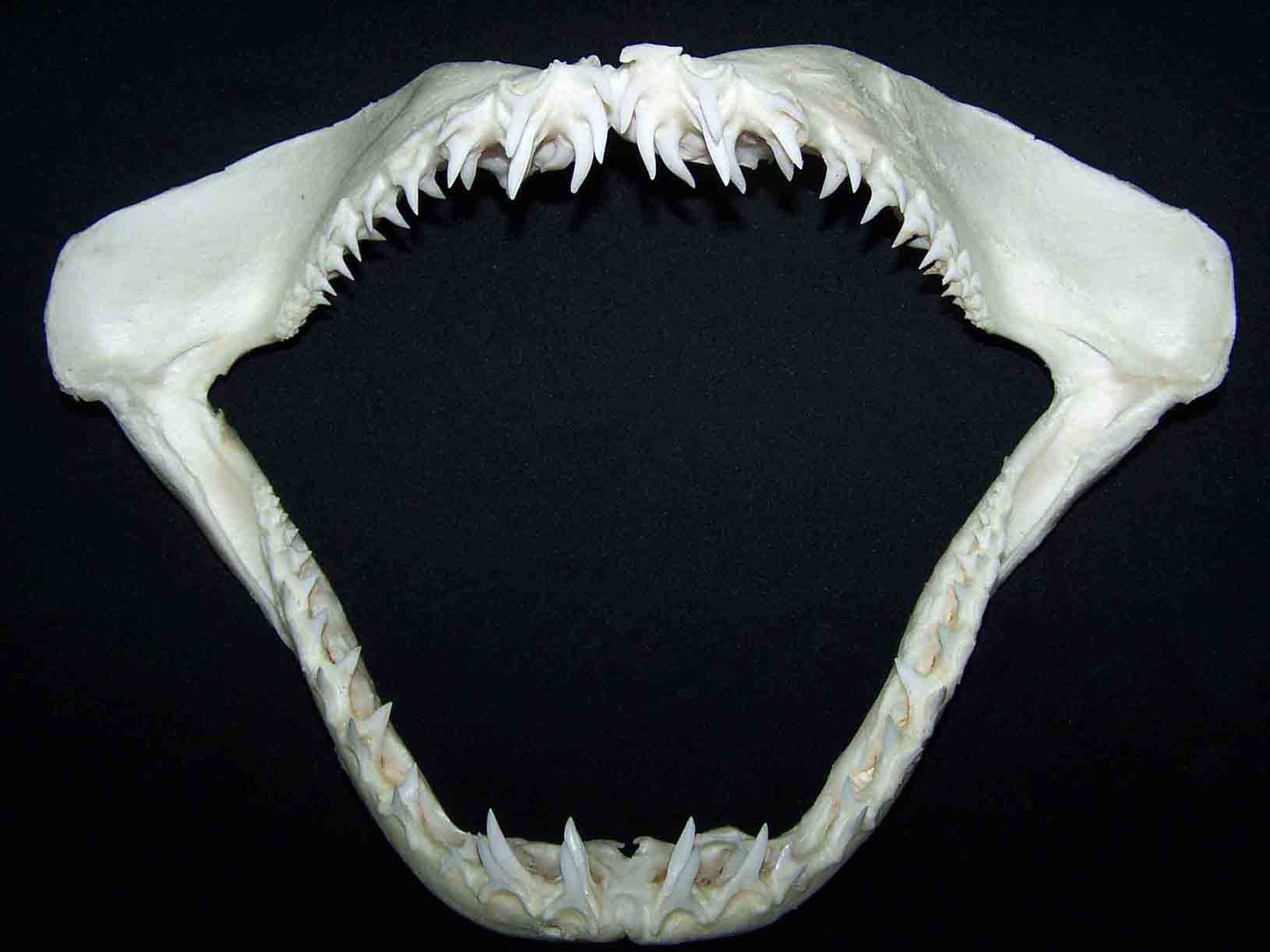
   This is the Tiger Shark's jaw bone.
So you probably have a vision of how aggressive this shark captures its prey. 


Check out this video of a Tiger Shark!


THRESHER SHARK
My second favorite shark is the Thresher Shark.  A Thresher Shark's tail is almost as long as the rest of its body.  The lower part of the tail is small but the upper part is large with a pointed tip.  This is a super powerful long tail which is very dangerous.  They thrash their tails from side to side to round up and wound their prey.  They will even use their tails to hit low flying birds out of the air.  I know that you can't wait to see what that tails look like.  The tail reminds me of a boomerang.  The Thresher Shark is a very good swimmer and can leap clear out of the water.

The Thresher Shark with its long tail.         The Thresher Shark is leaping out of the water.

The Thresher Shark has a short snout and large eyes.  They have small jaws with curved sharp teeth. They come in colors from brown to black with white markings underneath. They can grow up to 20 feet long.  The Thresher Shark eats herring, mackerel and squid. You can find them in coastal waters in warm and temperate areas of the world.  Thresher Sharks give birth up to four live young at one time.  The eggs are hatched inside the mother.  They produce more young but some of its young will eat others while inside their mother's body.  These sharks will eat their own family members.  You would call this cannibalism. 

 
From the front this Thresher Shark looks like a plane that is about to land.

Check out this Thresher Shark feeding.  Look at how it rounds up its prey. 


BLUE SHARK
Now on to my last favorite shark.  This blue fish is one of the most popular sharks in the world.  It is even more popular as a dish.  My mother loves eating fried Blue Shark and I have even tried it myself.  Let me say that I have eaten a lot of better dishes than fried Blue Shark.  There is something about eating shark meat that does not seem right to me.   
This is a Blue Shark.                     Do you want this plate of fried Blue Shark? 

Blue Sharks are easily recognized because of its color, which is blue.  They have very large pectoral fins and are long and skinny looking.  They can grow up to 13 feet long.  They also have sharp triangular shaped teeth.  They feed both inshore and in the open ocean.  They eat many types of fish like herring, cod, haddock, pollock, mackerel, butterfish, tuna and swordfish.   The Blue Shark gives birth to live pups. The litters are about 25 to 50 pups.  The Blue Shark can be found in temperate waters and tropical waters.  They live in the Atlantic, Pacific and Indian Oceans in both inshore and offshore waters.

 Check out this baby Blue Shark being hand feed.


 I hope you enjoyed my post and learned a lot.  Until next time.  Adios!!!!


Sunday, September 18, 2011

The Hagfish and Lamprey


The first time I heard about a hagfish was on Sponge Bob Square Pants.  My mother was wrong, you can learn something from watching Sponge Bob.


SpongeBob SquarePants - 08x23 Legends of Bikini Bottom: Hagfish Hex


Check out Madame Hagfish! 


Today, I am going to talk about TWO kinds of fish called the Lamprey and the hagfish.  They are known as jawless fish.  Fish without jaws were the first vertebrates on earth which lived on the seabed and sucked up their food.  Most jawless fish died about three million years ago ; however, the Lampreys and Hagfish still exist.  Both the Lampreys and the Hagfish have bodies like snakes, round mouths, and tiny eyes.  They also have slimy skin and no scales.  The openings for their gills are shaped like portholes. 


Portholes

At the bottom are pictures of the Lamprey and the Hagfish  (They are definitely "Freaks of Nature").   I bet you can't tell which one is my favorite. It will be HARD.


Hagfish are deep sea scavengers which feed on dead or dying fish.  They have very poor eye sight. However, they have an excellent sense of smell which helps them to find food.  They often slither right inside their prey. The Hagfish does not have jaws, but it has small teeth that it uses to eat its prey from the inside.  It releases a smelly slime as a defense which makes it hard for a predator to grab hold of  it.  The slime is very strong and hard to remove.  To remove the slime, the Hagfish ties its body in a knot which makes the slime slip down to its tail. The Hagfish is known for its ability to produce vast amounts of slime.  The slime comes from the glands that line both sides of the Hagfish body.  The slime comes out in a concentrated form but swells when it contacts seawater.
                                                                              Maybe they need glasses!


Hagfish Slime.This is gross!  The Hagfish all tied up!
The Hagfish has four hearts and its color can be either pink, brown or grey.  I guess if one heart does not work it has three others.  Hagfish lay long eggs and their young look like small adults when they are hatched.  Young Hagfish have both male and female organs but as they age they become male or female.  However, they are able to change gender from one season to another. There are currently sixty seven known species of Hagfish. 


THIS IS MY FAVORITE
A Hagfish


Lampreys can be found in temperate rivers and sea coasts.  They have dark brown to black backs and light yellow to light brown bellies.  There are about forty three species of Lampreys.  Some species live in fresh water for their entire life and others migrate from fresh water to the sea.  Adult Lampreys are parasites that feed on the blood of other fish.  They have a funnel like sucking mouth and sharp teeth for holding onto their prey.  Lampreys can hold onto their  prey for weeks while taking so much blood that their prey will die. I think the Lamprey has a lot in common with Dracula.

halloween clipart dracula

The Lamprey young are born in rivers.  The lamprey young are also blind and toothless.  The young spend up to six years filtering food from the water before they become adults.  When Sea Lamprey young become adults they travel downriver to the sea.
I KNOW IT'S SCARY!!!!!!!:(

A Lamprey funnel like mouth.                        Lots of Lampreys.

Now it is time to say GOODBYE.
I had a lot of fun learning about Hagfish and Lampreys.  I hope that you learned a lot from my post.......THAT LAMPREYS AND HAGFISH ARE SCARY!!!!!!!!!!!


Thursday, September 1, 2011

African Elephant

Today, I am going to talk about the African Elephant, its seven classifications,and its scientific name. Before I get started, let me tell you some facts about the African elephant.  The African Elephant is GIGANTIC.  It is the world's largest land animal.  They can grow up to 12 feet and weigh 650 pounds.  They eat all kinds of plants and they are found in Africa.  They are grey and have long trunks and tusks .

These are the seven classifications for the African Elephant.
 
Common Name: African Elephant

Domain: Eukaryota

Kingdom: Animalia

Phylum: Chordata

Class: Mammalia

Order: Proboscidea

Family: Elephantidae

Genus: Loxadonta

Species: africana


Scientific Name: Loxadonta africana

If you said "Hey what is a scientific name?" or "I never have heard these words, what are they?" Well you're going to find out the answer to your question.
  
A Scientific Name is how scientists classify living things, examples are: plants,animals, fungi, protist. The reason why they use scientific names is to avoid confusion among scientists who speak different languages.  To make a scientific name you have to first put the genus and then the species together.

The domain is Eukaryota.  The members of this domain all have cells with a nucleus that contains genetic material. The members include all animals, all plants, all fungi, all protist.  However, archae and bacteria do not belong to this kingdom.


The kingdom is Animalia.  All animals are members of the Kingdom Animalia. This Kingdom does not contain plants, bacteria, fungi and protist. All members of the Animalia Kingdom have many cells which have a nucleus inside a membrane.  These cells do not have cell walls. The animals, also rely directly or indirectly on other organisms for their food.


The Phylum is chordata.  These animals are vertebrates and invertebrates.  They have spinal and a post-anal tail.
Chordates - Phylum Chordata.

The class is Mammalia.   Members of this class are vertebrates and mammals.  This means that they have a backbone and spinal column. All mammals are warm-blooded. Mammals do not have feathers but are covered with fur or hairy skin. Mammal bones are solid.  All female mammals have mammary glands which produce milk for their young.


The order is Proboscidea.  Which means extraordinary noses. It's a nose, it's a tool, no, it's an elephant's trunk! The order of Proboscideahas has been named after the organ which fascinates everyone who watch it; the proboscis, or nose.  Animals in this order are massive.


The family is Elephantidae. Animals in this family have five toes.  


The Genus is Loxodonta.  Animals in this Genus have enormous flapping ears and ivory tusks.                                                                                              
African Elephant


Asian Elephant


The species is africana. African Elephants live on the savannas or grasslands of Africa. They are herbivores, and feed on grasses, fruits, tree leaves, bark, shrubs, and vines.


     Grasslands
 Savanna

I chose the African elephant for this post because he is big and strong like me.  Also the elephant is the mascot of my favorite football team, the Alabama Crimson Tide.  Roll Tide !!!!!!


Monday, August 22, 2011

6 Kingdoms of Life

Once upon a time there was a Greek philosopher that lived in Greece named Aristotle. Aristotle tried to divide every living thing into two main groups called kingdoms. The two kingdoms were the animals and the plants  and that system lasted for 2,000 years, until scientists proved Aristotle wrong and said that there are 6 kingdoms not 2. Scientist looked at the organism's cell structure, how it moved about, how it got its food and how it reproduced.  The 6 kingdoms are animal, plant, fungi, protist, archaebacteria and eubacteria.

I will now explain in what way the 6 kingdoms are alike and different.  I will also give examples of organisms in each kingdom.

The animal kingdom organisms have many cells with a nucleus.  They get food by eating other organisms and some have backbones and some don't.  They reproduce by live births and laying eggs.  Examples of organisms in the animal kingdom are mammals, reptiles, fish, insects, birds, whales, sea urchins coral, jelly fish and sponges.  Below is a picture of some of these organisms.  It's the Lion King!

The plant kingdom organisms have many cells with a cell wall.  They make their own food by photosynthesis.  They reproduce by spores or seeds.  Examples of organisms in the plants kingdom are dogwood, maple, pineapple tree, apple tree, magnolia, cedar and orange tree.  Below is a picture of some herbs.  This looks like my grandma's garden.

The fungi kingdom organisms have single cell or many cells with a cell wall.  They get food by feeding on living or dead organisms.  Many fungi are decomposers.  They reproduce by spores.  Examples of organisms in the fungi kingdom are mushrooms, yeasts, some molds and puffballs. Below is a picture of some mushrooms. I don't want these mushrooms on my pizza.

The protist kingdom organisms have single cell or many cells with a nucleus.  They get food by feeding on living organisms or making their own food or both.  They produce by mitosis, meiosis and fertilization.  Examples of organisms in the protist kingdom are amoeba, plankton, algae, paramecium euglena. Below is a picture of amoeba under a microscope.  This looks like barf.

The archaebacteria kingdom organisms have single cell without a nucleus. They get their food by feeding on living organisms or making its own food or both.  They produce by binary fusion which is where one cell divides itself into two new cells. Examples of organisms in the archaebacteria kingdom are halophiles, methanogens and thermophiles. Below is a picture of halophiles under a microscope.  Ths looks cherries in milk.


The eubacteria kingdom organisms are single cell without a nucleus.  They get food by feeding on living organisms or making their own food.  They reproduce by spores.  Examples of organisms in the eubacteria kingdom are bacillius anthracis, escherichia coli, clostridium perfringens and clostridium tetani.  Below is a picture of escherichia coli under a microscope.  Oh, this looks gross.

It has been a lot of fun learning about the 6 kingdoms.  I hope you enjoyed reading my blog and learned a lot.